Contemplations
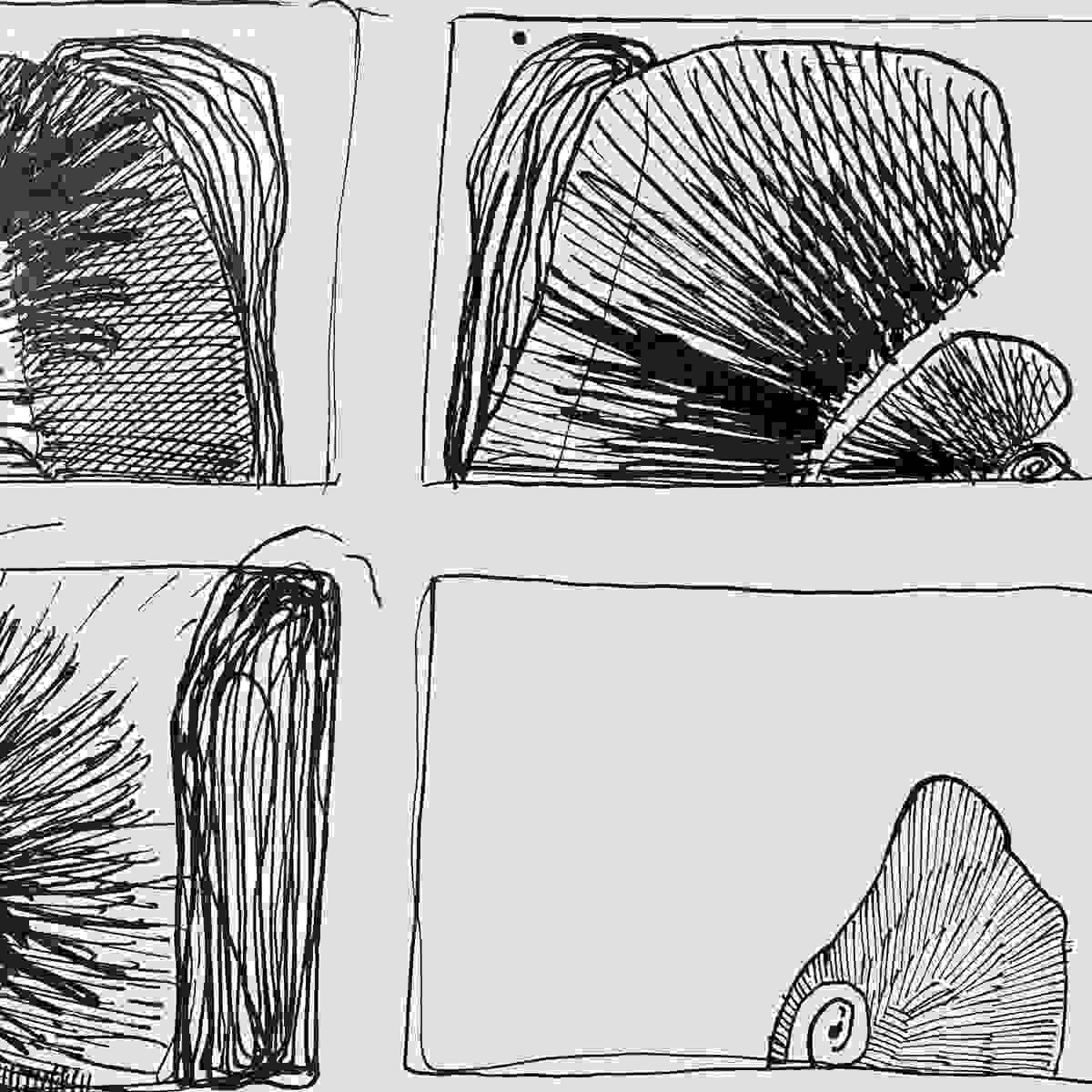
This work arises out of an inner necessity*
My sculptures do not stem from a desire to create art. Rather, they are an expression of a stifling energy within me - an energy that is felt but finds no outlet. Eckhart Tolle might call this the ‘pain-body’: a field of negative energy composed of all the emotional pain you have experienced in your life but have not fully processed. A residue that lodges itself in your cells and psyche.
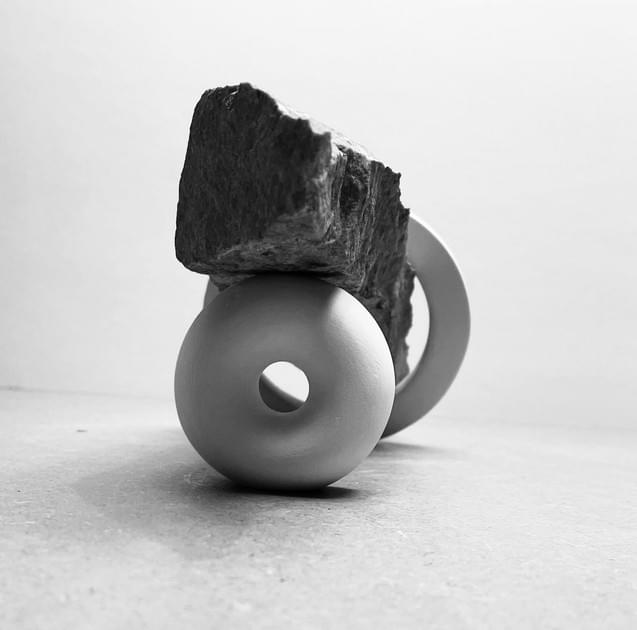
The ‘pain-body’ lives alongside you like an invisible parasite. Usually dormant, until it stirs and feeds itself on fresh negative energy. I want to be free of that. And through the process of casting, cutting, chopping, grinding and sanding, I succeed.º Little by little, in time.
ºNote: Long-suppressed emotions manifest as chronic muscletension in the body. To me, this feels like solidified energy - intangible, unable to find an outlet as a whole. Scientific terms such as "physical armoring" or "muscular armor" are applicable here (Wilhelm
Reich, Character Analysis, 1933). Research into bioenergetics and the
relationship between movement and emotion demonstrates that expressive movements and muscle stretching can break through this muscular armor, allowing blocked life energy to flow again (Alexander Lowen, Bioenergetics, 1975). More recent research findings on this subject can be found in The Body Keeps the Score (Bessel van der Kolk, 2014) and Waking the Tiger: Healing Trauma by Peter Levine (1997).* Quote taken from the documentary about Sabato ‘Simon’ Rodia and his monumental ‘Nuestro Pueblo’ better known as the ‘Watts Towers’ (1921-1954, Los Angeles, USA)
“Emotions for me are very bothersome, because they are completely inappropriate to my size. My emotions are my demons. It is not the emotions themselves. It is the intensity of my emotions that are much too much for me to handle. And that is why I transfer them; I transfer the energy into sculpture” (Louise Bourgeois, 1911-2010).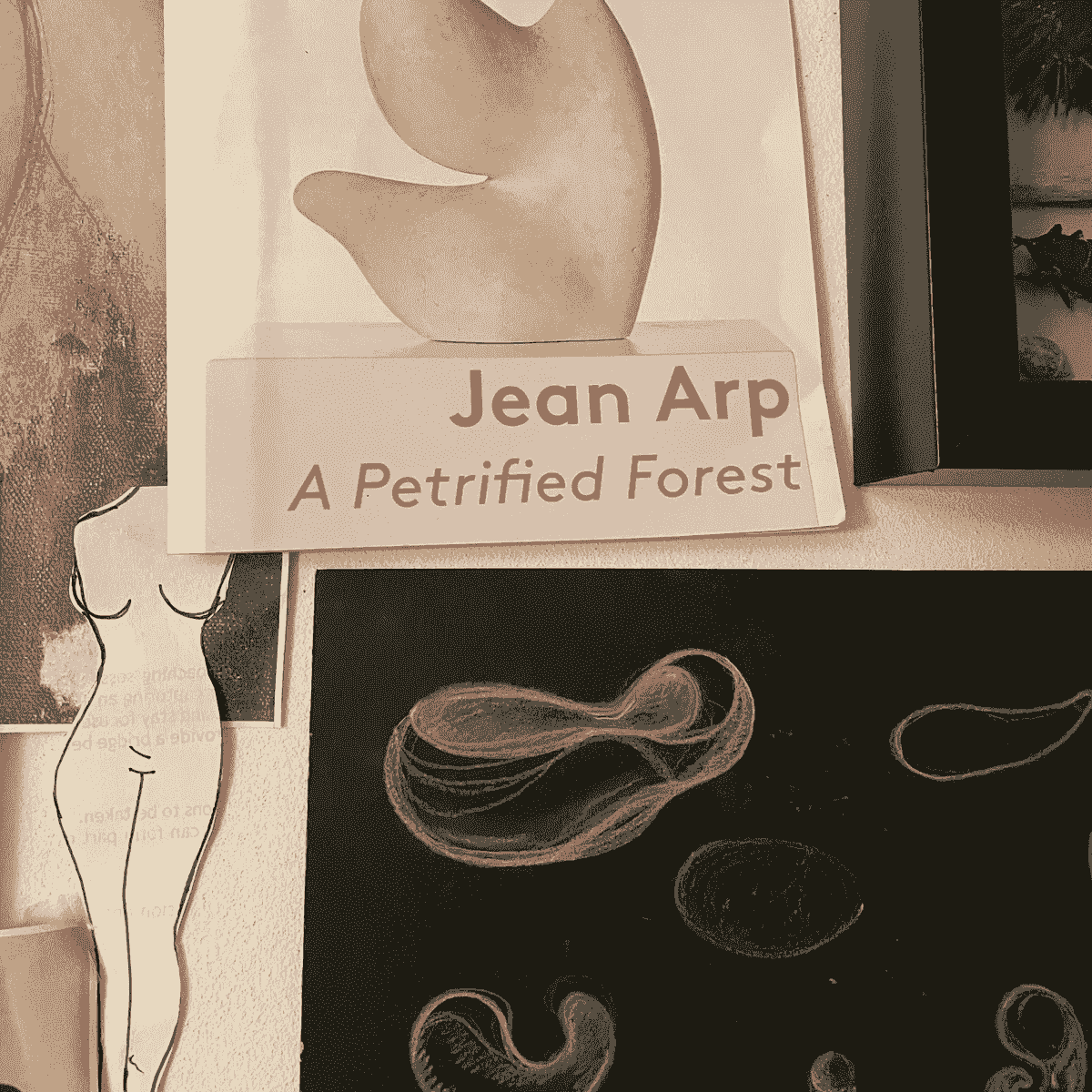
It seems to me as if all I do is move my hands*
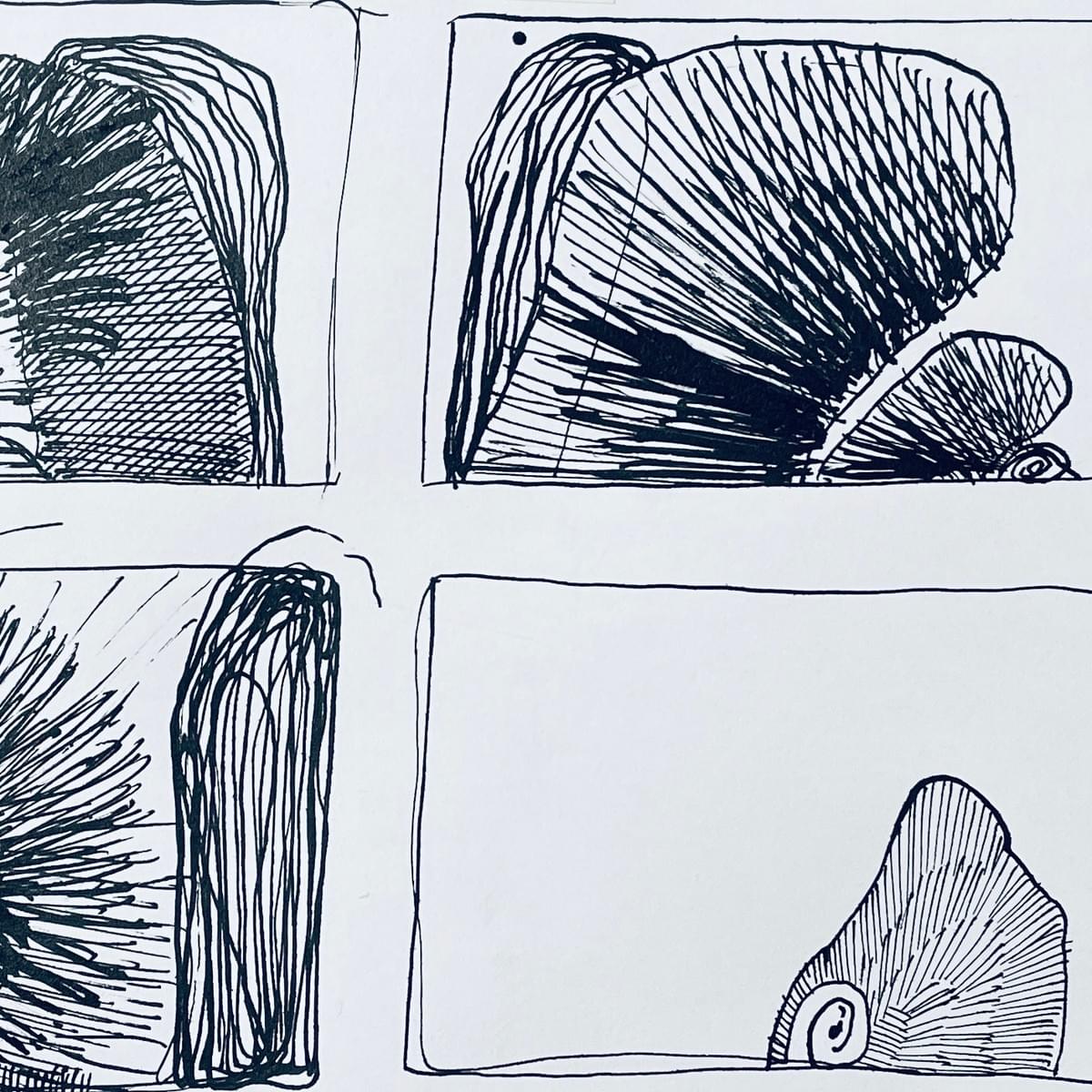
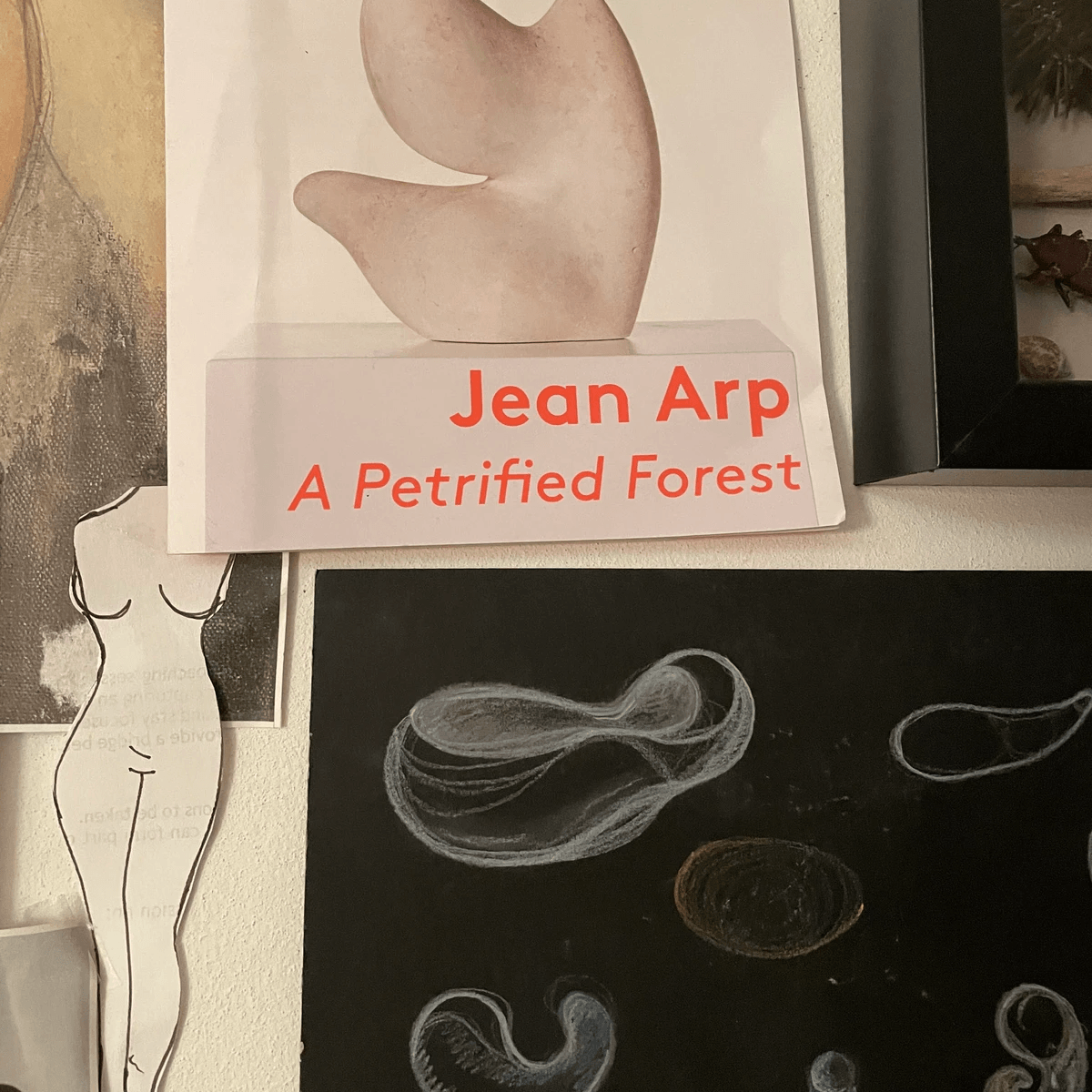
If art is not about objectively copying the outside world, but rather about revealing what the artist feels and experiences within that world, then what art reveals may well be the outline of the sum of what is seen and felt. A row of trees becomes a line. A group of birds an oval shape. Random stones a layered structure held together by the overall outline. It reminds me of the sculptural language of Jean/Hans Arp whose biomorphic abstractions are reminiscent of clouds, stones, cells or murmurations.
These bird flocks are of particular interest to me because of their organic, constantly changing, apperance. Not without reason I gather. In In un volo di storni: La meraviglia dei sistemi complessi, theoretical physicist Giorgio Parisi explains how and why starlings form these fluid shapes in the air. Together with his team Parisi
demonstrated that the individual behavior of the birds, driven by basicrules, leads to the specific rounded flock-shapes. Safety proves to be the
Leitmotif. Flocking creates mass and mass creates strenght. By mirroring each
other’s behavior, the birds stay connected and avoid isolation. Parisi’s team discovered futhermore that the density of birds was 30% higher at the edges than at the center. Again a safety measure: by strengthening and smoothing the borders, you keep the enemy out.If we were to apply this insight to e.g. Arp’s artful, rounded, and tactile forms,
one might suggest that the absence of erratic shapes and interruptions
underscores an (unconscious) desire for safety. Given the era in which he lived
and worked, this idea may not be far from the truth. In any case, it makes you
wonder if it were really Arps’ hands that took the lead? Could it be that it was the primal human urge for safety that was truly at the helm?* 'I allow myself to be guidedby the work which is in the process of being born, I have confidence in it. I do not think about it. The forms arrive pleasant, or strange, hostile, inexplicable, mute, or drowsy. They are born from themselves. It seems to me as if all I do is move my hands.' (Jean Arp, Jours effeuillés: Poèmes, essaies, souvenirs (1966)).
Denn im Verlangen, Leiden zu sehen, liegt der Keim der Machtausübun*
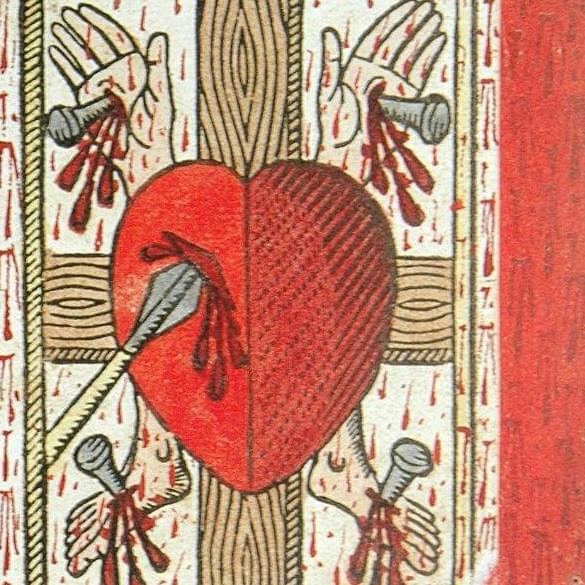
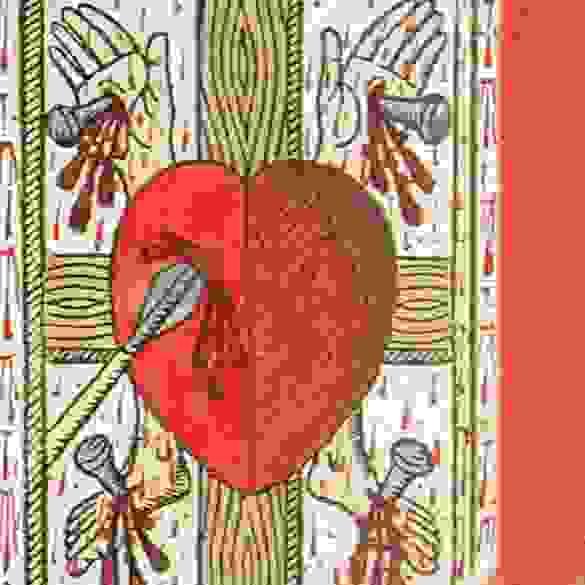
In my twenties, I studied woodcuts depicted in books printed in the late 15th and early 16th century. These were
predominantly religious in nature. Under the influence of the ‘Devotio Moderna’ (a religious movement that urged believers to experience their faith in a more personal and emotional way) the suffering of Christ was depicted with increasing intensity. By portraying his grief and fear it became easier for ordinary people to identify with the divine and to feel compassion for his suffering. This turned out tot be a magic formula for winning over converts by the struggling church. Through
visually emphasizing the suffering of the Son of God, an emotional appeal was
made to the loyalty of "His children."This form of emotional manipulation was - and remains - highly effective. By making one’s own suffering visible, one compels the observer to suffer in turn. This grants ‘the powerless’ (the initial victim) a kind of dominion over ‘the powerful’ (the observer)*, who comes to share the burden of the other’s fate.
Suffering as an universal human theme is an element of my work. In a new series of sculptures, I seek to explore the subtle ways in which suffering manifests itself in art. I am particulary interested in exploring the minimal elements that must be displayed to be interpreted by the observer as suffering and thereby triggering empathy and the transmission of that suffering. In doing so, I chose the Pietà as a starting point for my research. The Pietà is – for me - an universal and condensed image of suffering and loyalty between a mother and her child, between the ordinary and the extraordinary.
*Friedrich Nietzsche (Posthumous Fragments 1885–1886): "Denn im Verlangen, Leiden zu sehen, liegt der Keim der Machtausübung; das Sichtbarmachen des Leidens zwingt den anderen, seinerseits zu leiden, und so gewinnt der Ohnmächtige eine Art Herrschaft über den Mächtigen."